
Sunday, October 12, 2014
Book Search - The Circle
To start my book search, I went to Amazon and looked through the top picks of 2013. I wanted to find a book regarding the "information society" in a non-generic genre. I found one book that was was artistically appealing and I recognized the author, JK Rowling. The book "The Cuckoo's Calling" is a 455 page nonfiction, mystery book. Although the plot seemed quite interesting, I didn't think I could effectively relate it to the information society. Another prospect I found was "Thank You For Your Service." This is a 256 page about soldiers after returning home and readjusting to their American lifestyles. Although this book seemed interesting and able to relate to the information society, the reviews mentioned that it was quite a boring read. There were no adjectives for the majority of the story, which seems like it would be difficult to get through. The last book I found and the one I chose to pick for my project is "The Circle" by Dave Eggers. This book is a nonfiction book focused on a woman landing her dream job at an internet company that has merged all social media tools. The story, besides the obvious relation to social media, incorporates the struggles of hierarchy in an information society. This 504 page nonfiction book seems like it should be an exciting read with lots of connections to the information society and the modern technology world. I found a review by Seth Stevenson on Business Week (http://www.businessweek.com/articles/2013-10-03/book-review-the-circle-by-dave-eggers). He describes this book as a possible reality that could occur in out technology society if social media keeps expanding. Another review by Alexander Nazaryan from News Week wrote a more in depth review of "The Circle." With quotes and inserts shared in his review, I got a good understanding what this book will cover and how it will deliver. (http://search.proquest.com.ezproxy.library.wisc.edu/pqrl/docview/1469418431/80754303DFB84C1FPQ/3?accountid=465)

Book Assignment
When i first started looking on Amazon for books, i started out with very broad keywords such as, "the information society", "the network society", and "technology'. After not having much success with those, especially in finding books published in the last two years, i narrowed by search down to keywords such as "social media" and not advantage of the suggested for you information Amazon provides.
The first book I found was "A Social Strategy: How We Profit from Social Media" by Mikolaj Piskorski. It is a 288-page book and was rated 4.6 stars on Amazon. It is about the difference between social media and traditional media and how companies can capitalize on this new development. There were only 9 customer reviews, they were mostly positive, however some did mention that the language used was little hard to grasp. Using WorldCat, I found that there were not many available in libraries near me and it only had 2 reviews on Google Books. I went to GoodReads, where the book only had 13 ratings, and some negative comments. Based on the lack of feedback and the fact that it seemed more like a business heavy book i decided to keep looking.
The next book I found was "Alone Together: Why We Expect More from Technology and Less from Each Other" by Sherry Turkle. It is about how as technology ramps up our emotional lives ramp down, based off of hundreds of interviews and over 15 years of study. It received 4.1 stars on Amazon with nearly 145 customer reviews, many of the reviews stated how easy to read the book was. It was found at a large number of libraries around me and had 13 reviews on Google Books. On GoodReads it had over 400 reviews and a rating of 3.57, but it had a lot of mixed reviews, some either loved it or hated it.
The last book (and winner) I found was "Writing on the Wall: Social Media, the First 2,000 Years" by Tom Standage. It is a 288-page book and was rated 4.4 stars on Amazon. It is about the history of social media, and how social media is not a new phenomenon by comparing modern online technology to ancient social media. It had 63 customer reviews, almost all of them being 5 stars. It was found in not a large amount of libraries around me on WorldCat, but had 26 reviews on Google Books, all very positive. What really sold me on this book was the positive reception it had on GoodReads, with a 3.91 rating and almost 100 very positive reviews. When I went to ProQuest and Project Muse I found a handful of articles on the book that could help me in the paper.
Book Assignment
When searching for a book on Amazon.com, I was surprised at
how difficult it was to find a book that was copyrighted within the last two
years. I persevered, however, and found an incredibly fascinating book titled
“The Instagram Book.” The book contains 200 pages of glossy Instagram pictures
and an in depth analysis of the creative online network. Furthermore, it describes the
revolutionary app Instagram, and its ability to transform amateur photographers
and their photos into artful and crafty works of art. Unfortunately, I could
not find this book on the Project Muse and Proquest databases to scan their
reviews, and Amazon.com didn’t have a review either but I’d be interested to
see how Steve Crist and Megan Shoemaker portray the revolutionary Instagram.

My search extended further as I typed in “Network Society”
into Amazon.com and found an interesting book entitled, “Society and the
Internet: How Networks of Information in Our Lives” by Mark Graham. The book
utilizes research and analysis to describe the diffusion networking has on
society today through a political, economic and social lens. This book was also
not featured on the databases.
Finally, I looked up the book “Digital Disconnect” by Robert
W. McChesney.
The review states: “hailed as “important” (Truthdig) and praised for its
“excellent insight” (Patricia J. Williams, The Nation), Digital
Disconnect, by activist and “exemplary public intellectual” (Choice)
Robert W. McChesney, skewers the assumption that a society drenched in
information in a digital age is inherently a democratic one.” –New York Times.
The Book portrays society in economic terms and relates it to growing democracy
and capitalism. This book was on Proquest.com and reviewed by Dylan Roberts of
Canadian Dimension. http://search.proquest.com.ezproxy.library.wisc.edu/pqrl/docview/1411126705/CA20F6E1939A487FPQ/1?accountid=465
citation: Roberts, Dylan. "Digital Disconnect: How Capitalism is Turning the Internet Against Democracy." Canadian Dimension May 2013: 46. ProQuest. Web. 12 Oct. 2014 .
Friday, October 10, 2014
Hatching Twitter: A True Story of Money, Power, Friendship, and Betrayal
My three candidates:
1) The Tao of Twitter by Mark W. Schaefer ($10.43 for a paperback)
2) Twitter in 30 Minutes by Ian Lamont ($9.49 for a paperback)
3) Hatching Twitter: A True Story of Money, Power, Friendship, and Betrayal by Nick Bolton($12.99 for a paperback)
Narrowing them down...
World Cat:
1) The Tao of Twitter is held by 250 libraries worldwide.
2) Twitter in 30 Minutes is held by only 8 libraries.
3) Hatching Twitter is held by 647 libraries worldwide.
World Cat suggests that Twitter in 30 Minutes is not very popular, and I am disqualifying it for that reason.
Google Books:
1) The Tao of Twitter has 0 reviews.
3) Hatching Twitter, however, had 20 reviews on Google Books and received a 4/5 star rating.
I am tentatively choosing Hatching Twitter, pending the results of my Library Thing search results.
Library Thing: actually didn't have many results for books containing twitter. None of my books were available there.
The winner: Hatching Twitter: A True Story of Money, Power, Friendship, and Betrayal by Nick Bolton
Scholarly Review found by Ebsco Host
HATCHING TWITTER A True Story of Money, Power, Friendship, and Betrayal. (2013). Kirkus Reviews, 81(22), 219.
Thursday, October 9, 2014
Book Search: "The Glass Cage: Automation and Us"

When I began my book search, I was surprised to find that there were
so many books written about the information age. I started my search broad,
using terms like “information age” and “network society,” and eventually zeroed
in on a more specific subject. I couldn’t seem to think of specific search
terms from the start, so I relied on Amazon’s “suggested for you” books to gain
more insight on potential search terms. As I dug deeper, I found that I was
really interested in the effects of technology on society.
The first book that caught my attention was “The New School: How the
Information Age Will Save American Education From Itself,” by Glenn H.
Reynolds. It is a 112-page book and was rated 4.5 stars on Amazon. It is about
the costliness of public and private schooling, and the rise of online
education. There were 45 customer reviews, which said things like “this book
was very easy to understand and very thoroughly researched.” Other reviews said
it was a bit slow to read. It was found in 448 libraries in my area and had 13
reviews on Google Books. Library Thing had few reviews on this book. When I
went to ProQuest and Project Muse, I could not seem to find any reviews. This
lack of feedback urged me to keep looking.
The next book I came across was “The Organized Mind: Thinking Straight in the Age of Information Overload,”
published August 19, 2014 by Daniel J.
Levitin. This 512-page book got 4 stars on Amazon and had 30
reviews, 27 of which were positive. It was found in 956 libraries in my area
and received mixed reviews on Google Books. Some readers loved the book, while
others said it was too critical. This inconsistency turned me away and I
continued searching.
After a while, I became frustrated because I could not find any
books that interested me that were also published within the last two years. I
conducted a separate Google search to find the bestsellers of books in the
technology field. While reading through the list, one title and book cover
caught my eye. It is called “The Glass
Cage: Automation and Us” by Nicholas Carr.
The title perfectly describes how I view our high-tech world today. This book received
4.5 stars on Amazon and had 5 positive reviews. There was one negative review
that claimed Carr focuses almost entirely on the humanistic aspects of
automation and gives only very limited attention to its effects on jobs. This
was the only negativity I found on the book but it did not get me down. I am
still very interested in reading it. In a review on ProQuest, Carl Flays (from
“The Booklist”) compares this book to Carr’s first book, “The Shallows”
published in 2010. He raves how “Carr brilliantly and scrupulously explores
all the psychological and economic angles of our increasingly
problematic reliance on machinery and microchips to manage almost every aspect
of our lives.” I was finally sold on this book, and began looking up other
types of reviews that were out there. I actually came across an interview where
the author, Nicholas Carr, talks about the release of his new book. I posted
the link to the interview below if anyone is interested!
ProQuest citation:
Hays,
Carl. "The Glass Cage: Automation and Us." The Booklist 110.22 (2014): 21. ProQuest. Web. 9 Oct. 2014.
Julia Zureikat
Book Search- "Networks of Outrage and Hope"
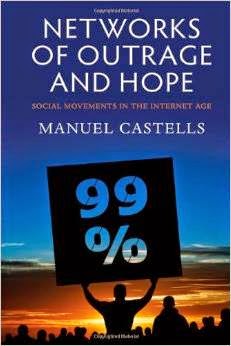
One thing that was very difficult about this book search was that many of the books I was really interested in were published earlier than 2 years ago. However, once I narrowed my topic down to social media and social networking for protests, there were many more newer books listed since that is a newer topic. At first I just searched “social media”, but then after looking at further tags on the books I was looking at, I started searching “social networking” which ended up having much more exciting results. The first book I found was, “Social Media Explained: Untangling the World's Most Misunderstood Business Trend”. This book looked very interesting and examined how social media has taken over businesses and marketing these days. However, it seemed like too much of a handbook for businesses and less of an interesting read. After that, I found the book, "Tweets and the Streets: Social Media and Contemporary Activism”. This book title really pulled me in because it shows a clear connection between social media and the world. I also liked the idea of social media impacting contemporary activism, so this is when I changed my search words to “social networking”. After I went along with this search, I found the book, "Networks of Outrage and Hope: Social Movements in the Internet Age”. This one definitely won my attention right away. The abstract talked about how social networking is causing the formation of these social movements based on strong communal feelings in different places around the world. The Information Society is becoming more and more global, yet local at the same time. One of the reviews on this book on Google Books was, “Important book, written at an important time.” This was exactly what I wanted to read about, the important matters of social networking for movements in our current time. So, chose this book and went further into ProQuest and Project Muse to see what they had about it. ProQuest had data on it, but Project Muse didn’t. The book is at hundreds of libraries and has a 4-star rating. One journal review I found on the book was through “Journal for a Global Sustainable Information Society”. The analysis talks about Castells’ ideas and how the social networking of today really does effect movements that have emerged and are emerging. Below is a citation for this review.
journal review: http://www.triple-c.at/index.php/tripleC/article/view/459
Book Project: No Place to Hide
Choosing a Book about the Information Society
I found
it surprisingly difficult to find interesting books regarding our topic that
were published within the last two years.
I began by searching keywords like “information society”, “technology”,
“social media”, “Internet”, and many more on Amazon. I mostly just found textbooks with very
focused topics. So then, I moved to
GoodReads.com which provided me lists of books that related to those
topics. I was able to find two books
written in the last two years that I felt related. The first book I found was Growth Hacker Marketing: A Primer on the
Future of PR, Marketing, and Advertising.
Although it sounds boring, I found very positive reviews that called it
a “must-read!”. It is a book written by
the businessman guru that built American Apparel, and he talks about the new
types of marketing tactics (using Twitter, Facebook…) that are necessary for a successful business to use in our
modern day society. Then, I found The Illustrated Man by Ray Bradbury, a
book following multiple characters on the last night of the world. It emphasizes how technology awakens the most
primal instincts. After finding these
books, I was having a lot of trouble finding a third book to consider, so I
decided to move to the iBooks store and see what was popular in the technology
and internet section of the online store.
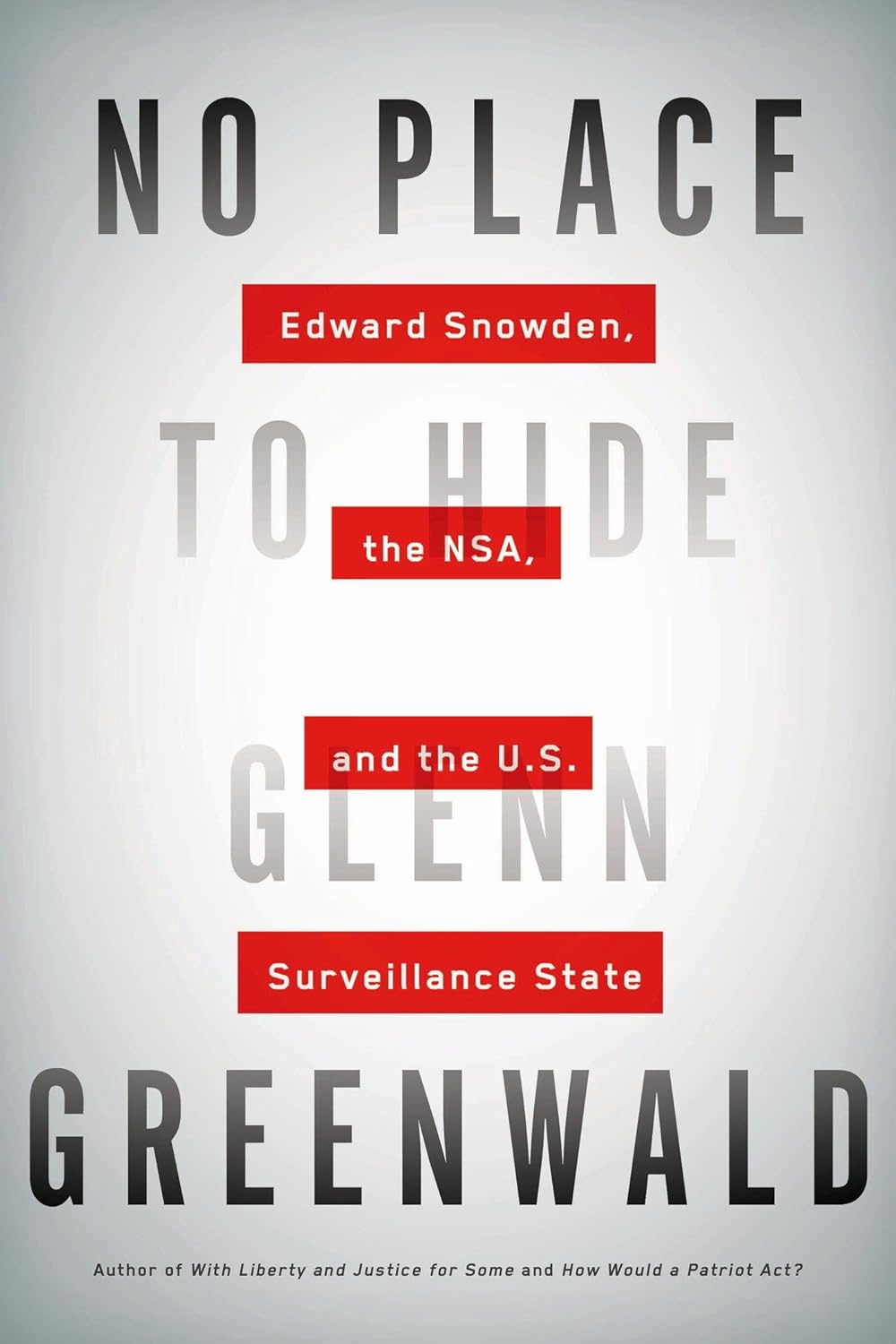
After a few minutes of browsing, I found No Place to Hide: Edward Snowden, the NSA, and the U.S. Surveillance
State a true story about the man responsible for WikiLeaks. The book delves further into the effects of
media and the government’s relationship with the private lives of
citizens. This book received very
enthusiastic reviews that raved about how interesting it was to hear the full
story. This book had almost twice the
amount of reviews than the other two books on GoogleBooks. On LibraryThing.com, the book Illustrated Man had far more reviews,
followed by No Place to Hide, and
then Growth Hacker Marketing. However, I didn't feel it connected to our class as well as the other options. After reading the descriptions and reviews of
all three books, I decided to choose No Place to Hide. I think it is the most relevant book to the
types of issues discussed in class, and I am excited to learn more about the
story of WikiLeaks.
I could not find any reviews for the book on Project Muse, but I found multiple reviews of the book on ProQuest. Below are two citations for very in-depth reviews of the book that I will probably use for my report.
I could not find any reviews for the book on Project Muse, but I found multiple reviews of the book on ProQuest. Below are two citations for very in-depth reviews of the book that I will probably use for my report.
Dyer, Geoff. "'no Place to Hide: Edward Snowden, the
NSA and the Surveillance State', by Glenn Greenwald." FT.com(2014)ProQuest. Web. 9 Oct. 2014.
"Peering into the
Darkness; the Snowden Leaks." The Economist May 17 2014:
79. ProQuest. Web. 9 Oct. 2014 .
Subscribe to:
Posts (Atom)